


Last updated: January 22, 2026
This article is written for independent pizza shop owners in the U.S. responding to recent headlines suggesting pizza’s popularity is declining — and looking for a clearer picture of what that actually means for local operators.
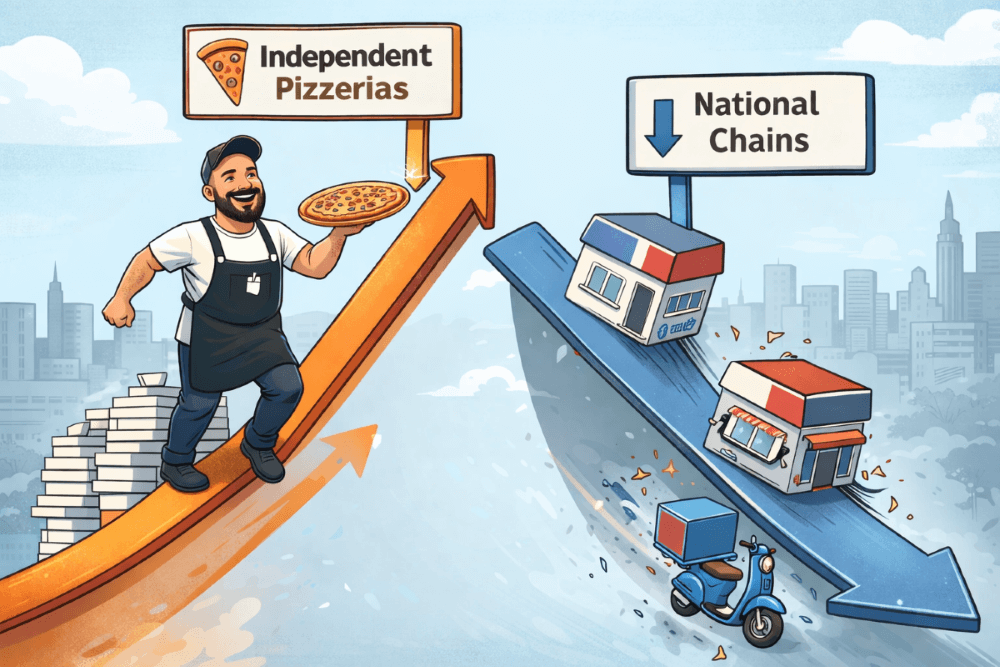
What the “Pizza Is Declining” Headlines Mean for Independent Pizzerias
A recent Wall Street Journal article reported that pizza has slipped in popularity compared to other restaurant categories. According to the article, pizza chains generated about $31 billion in sales in 2024, but pizza now ranks lower among chain cuisines as categories like coffee and Mexican restaurants continue to grow.
At first glance, that makes it sound like pizza is losing relevance. But for independent pizza shops, the story looks very different on the ground.
Across local markets, many independent pizzerias are still seeing steady demand, strong repeat business, and loyal customers — even as national chains struggle to adjust to changing expectations.
What those pizza headlines are actually saying
The Wall Street Journal analysis focuses mainly on chain performance and category rankings, not on whether people have stopped eating pizza or whether independent shops are failing.
Pizza remains one of the most commonly eaten foods in the U.S. Industry research consistently shows that roughly 12–13% of Americans eat pizza on any given day. While other categories may be growing faster, pizza continues to rank among the top restaurant categories by total annual sales.
What has changed is not demand, but competition. Customers today have more dining options than ever before — from fast-casual and ethnic cuisines to delivery-only concepts.
This shift tends to impact large chains more than independents. Chains depend on nationwide growth, standardized systems, and constant unit expansion. When category growth slows, that model feels pressure quickly. Independent pizza shops operate differently — and that difference matters.
Why independent pizza shops are still doing well
Independent pizza shops win on consistency and trust. Customers want to know that the pizza they order today will taste the same as last time, that delivery times are realistic, and that if something goes wrong, someone will fix it quickly.
Research across the restaurant industry consistently shows that repeat customers drive the majority of revenue for independent restaurants. These guests tend to order more frequently, spend more over time, and are less price-sensitive than first-time customers.

This is where day-to-day visibility matters. Operators who track performance closely — using tools like a pizza-focused POS and Performance Reporting — can spot issues early and correct them before they affect customers.
Operational visibility is especially important during peak hours, when small delays or errors can compound quickly and impact both customer satisfaction and staff stress.
Local accountability builds confidence — and confidence leads to repeat orders.
Technology now works for independent shops too
In the past, chains had access to technology that independents couldn’t afford. That gap has largely closed.
Today, independent pizza shops can use modern tools for:
- Point-of-sale and reporting that provide real-time insight into sales, labor, and trends
- Direct Online Ordering that reduces phone pressure and keeps customer data in-house
- Delivery Monitoring to improve promise times and delivery accuracy
- Built-in Loyalty Programs that encourage repeat visits
- Inventory Optimization to protect margins as food costs fluctuate
Industry surveys show that restaurants using integrated systems report fewer order errors, faster service times, and better labor visibility compared to those managing multiple disconnected tools.
The difference is how those tools are used. Independent operators tend to use technology to support execution — not replace the human side of the business.
Customers prefer places they trust
Convenience matters, but reliability matters more.
Customer research across the restaurant industry shows that guests are more likely to reorder from restaurants that provide accurate promise times, clear communication, and consistent quality — especially for delivery.
Clear order status updates and realistic delivery timing reduce frustration and increase confidence, shaping whether a customer orders again.
What this means for your pizza shop
Pizza isn’t disappearing. The market is simply more competitive and more fragmented than it used to be.
Independent pizzerias that focus on consistent quality, clear communication, and smart use of technology remain well positioned. The shops succeeding today aren’t trying to outscale national brands — they’re out-executing them where it matters most.
Ready to see what a unified pizza platform looks like in practice?