



This article is for: pizzeria owners, operators, and GMs who are comparing POS systems and want a platform that can handle in-store, online, and delivery operations without unnecessary complexity.
Top 15 POS Systems for Pizzerias (2026)
Choosing the right POS system for a pizzeria isn’t just about taking payments — it directly impacts how orders flow through your kitchen, how efficiently your staff operates, and how well you can grow across dine-in, takeout, and delivery.
Pizza restaurants have unique operational challenges: high order volume, delivery logistics, multiple ordering channels, and time-sensitive kitchen workflows. The right system should bring all of this together into a streamlined process.
Below are 15 of the top POS systems used by pizzerias today, each offering a different approach to managing operations, integrations, and growth.
1) FoodTec Solutions – Best All-in-One Platform for Pizzerias

FoodTec Solutions is an all-in-one restaurant technology platform built specifically for independent and multi-location pizzerias that want POS, online ordering, delivery management, loyalty, and marketing to work as a single, unified system — not a collection of disconnected tools.
FoodTec natively combines POS, first-party online ordering, delivery tracking, inventory, labor, loyalty, and SMS/email marketing into one platform, with shared data, consistent workflows, and a single operational backbone designed for high-volume pizza operations.
By contrast, platforms like Toast and Square typically rely on modular add-ons and app marketplaces. FoodTec is built for operators who want a fully integrated system that simplifies operations, centralizes data, and supports a direct-order-first strategy.
Benefits
- Unified system across all channels
- Integrated delivery tracking
- Built-in inventory and labor tools
- Real-time reporting
Pros
- Purpose-built for pizzerias
- No reliance on third-party add-ons
- Strong delivery management
Cons
- More robust than needed for small shops
2) Toast – Flexible POS with Large Ecosystem

Toast is a widely used restaurant POS platform designed for operators who want flexibility and a large ecosystem of integrations. It is particularly popular among restaurants looking for a modern, cloud-based system with strong hardware support.
The platform combines POS, online ordering, payroll, team management, and reporting into a modular system, allowing restaurants to build their setup over time. Its marketplace enables integration with many third-party tools.
Compared to all-in-one systems, Toast offers more flexibility but often requires additional modules or integrations to fully support delivery, marketing, and advanced operations.
Benefits
- Extensive integration marketplace
- Modern UI and hardware
- Strong reporting tools
Pros
- Highly customizable
- Widely adopted
Cons
- Costs increase with add-ons
- Less unified system
3) Square for Restaurants – Best for Simplicity

Square for Restaurants is a POS platform designed for ease of use and accessibility, making it a common choice for small or newer pizzerias. Its intuitive interface allows teams to get up and running quickly.
It combines payments, POS, and reporting into a streamlined system, with additional features available through integrations. This makes it a flexible starting point for businesses that don’t need advanced functionality right away.
Compared to pizza-specific systems, Square focuses more on simplicity than deep operational tools like delivery routing or kitchen optimization.
Benefits
- Easy setup
- Affordable pricing
- Clean interface
Pros
- Great for small teams
- Fast onboarding
Cons
- Limited delivery features
- Not ideal for high-volume shops
4) HungerRush – Built for Delivery Operations

HungerRush is a restaurant technology platform designed specifically for pizza and delivery-heavy operations. It focuses on helping restaurants manage high order volume efficiently.
The system combines POS, dispatch, online ordering, and marketing tools into one platform, with strong delivery management capabilities and driver tracking.
Compared to general POS systems, HungerRush is more specialized for delivery workflows, making it a strong option for shops where delivery is a major part of revenue.
Benefits
- Strong delivery management
- Pizza-focused workflows
- Integrated marketing tools
Pros
- Great for delivery-heavy pizzerias
Cons
- Steeper learning curve
5) Owner.com – Focused on Direct Online Ordering
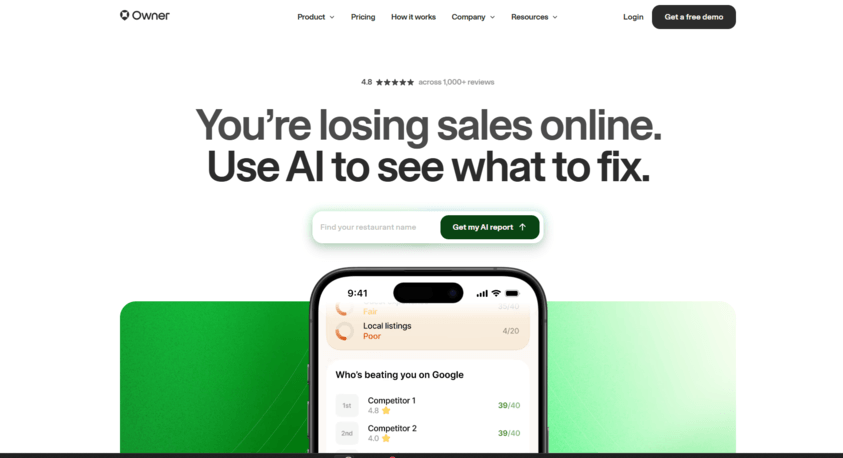

Owner.com is a platform designed to help restaurants grow direct online ordering and customer relationships. It focuses on increasing repeat business and reducing reliance on third-party apps.
It combines online ordering, CRM, and marketing tools into a system built for customer retention and engagement. It integrates with existing POS systems rather than replacing them.
Compared to traditional POS platforms, Owner.com is more focused on digital growth than in-store operations.
Benefits
- Strong online ordering tools
- Built-in marketing
- Customer data ownership
Pros
- Great for marketing-focused operators
Cons
- Not a full POS system
6) Revel Systems – Highly Customizable POS
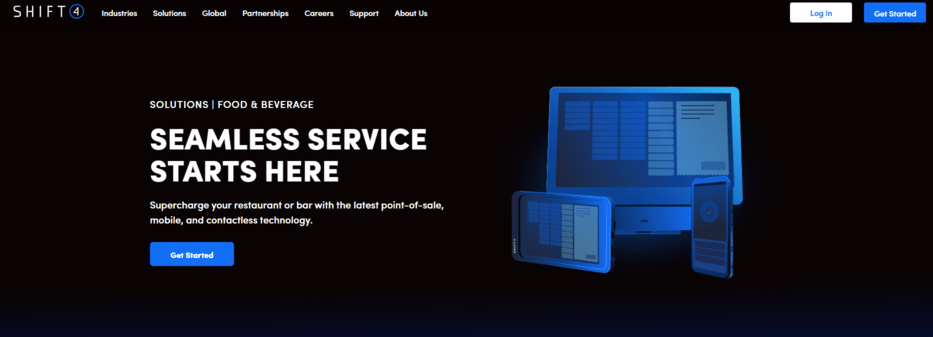

Revel Systems is a cloud-based POS platform designed for restaurants that need flexibility and scalability across multiple locations. It is often used by growing restaurant groups.
The system combines POS, inventory, and reporting into a customizable platform with an open API for integrations.
Compared to pizza-specific platforms, Revel offers flexibility but may require more setup and management.
Benefits
- Highly customizable
- Strong reporting
- Multi-location support
Pros
- Flexible workflows
Cons
- Complex setup
7) Rezku – Balanced POS with Strong Reporting
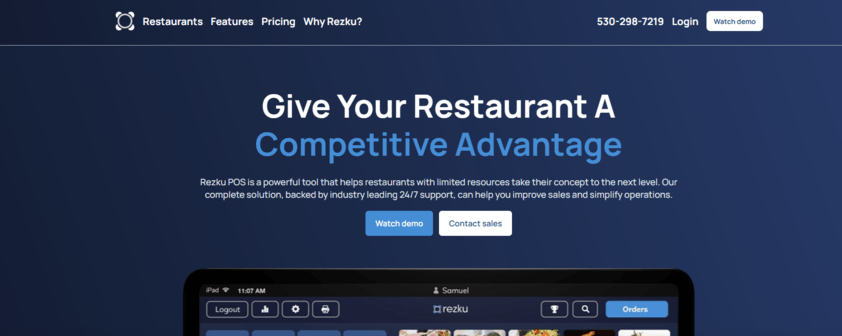

Rezku is a POS system focused on ease of use and operational visibility. It helps restaurant operators track performance and manage day-to-day operations efficiently.
The platform combines POS, reporting, and online ordering into a streamlined system designed for usability.
Compared to larger systems, Rezku focuses on balance rather than deep specialization.
Benefits
- Strong reporting
- Easy-to-use interface
Pros
- Good for mid-sized operations
Cons
- Less pizza-specific functionality
8) Lightspeed Restaurant – Data-Driven POS


Lightspeed is a cloud-based POS platform designed for restaurants that prioritize reporting and inventory management.
It combines POS, analytics, and integrations into a system that helps operators make data-driven decisions.
Compared to pizza-specific platforms, Lightspeed is more general-purpose.
Benefits
- Advanced reporting
- Inventory tools
Pros
- Strong analytics
Cons
- Less delivery focus
9) Clover – Hardware-Driven POS
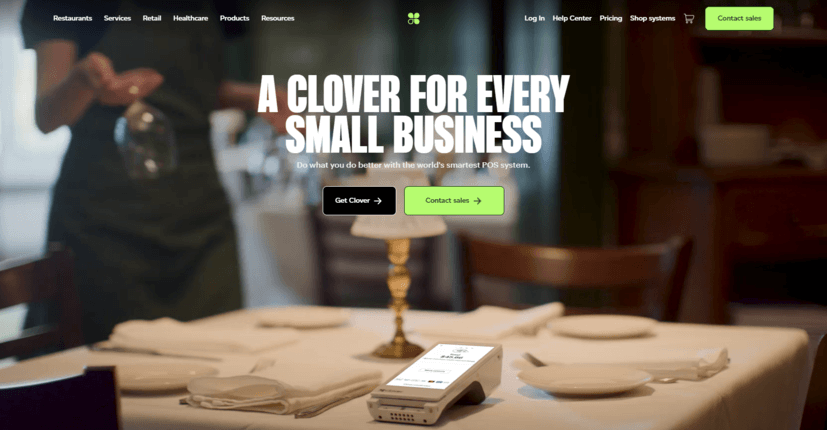

Clover is a POS system built around hardware and an app marketplace, allowing customization through third-party tools.
It combines POS and payments into a flexible system used by many small businesses.
Compared to all-in-one systems, Clover relies more on integrations.
Benefits
- Flexible hardware
- App marketplace
Pros
- Easy to start
Cons
- Fragmented system
10) TouchBistro – Front-of-House Focused POS
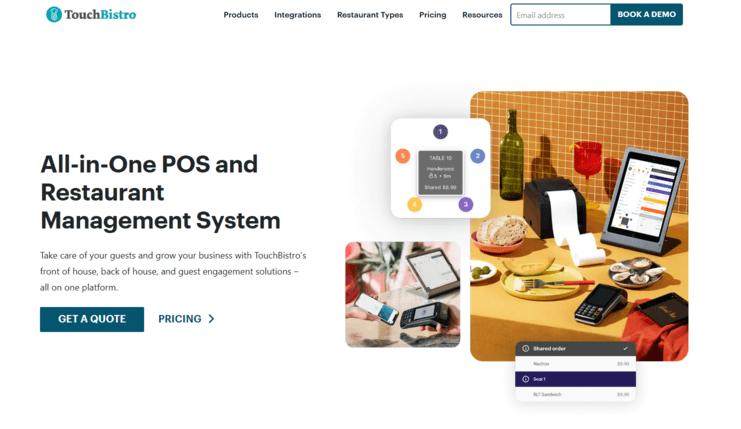

TouchBistro is designed for full-service restaurants, with tools focused on tableside ordering and staff workflows.
It helps streamline dine-in operations and improve service efficiency.
Compared to pizza-focused systems, it is less focused on delivery.
Benefits
- Tableside ordering
- Staff tools
Pros
- Strong for dine-in
Cons
- Limited delivery features
11) Upserve – Analytics-Focused POS

Upserve is a POS system focused on analytics and insights, helping operators understand customer behavior and sales trends.
It combines POS with reporting tools designed to improve decision-making.
Compared to others, it emphasizes data over operations.
Benefits
- Detailed reporting
- Customer insights
Pros
- Strong analytics
Cons
- Less operational depth
12) SpeedLine – Traditional Pizza POS
SpeedLine is a long-standing pizza POS system built specifically for delivery operations.
It focuses on reliability and core pizza workflows.
Compared to newer systems, it is more traditional.
Benefits
- Pizza-focused
- Reliable
Pros
- Proven system
Cons
- Older interface
13) Slice Register – POS for Independent Shops
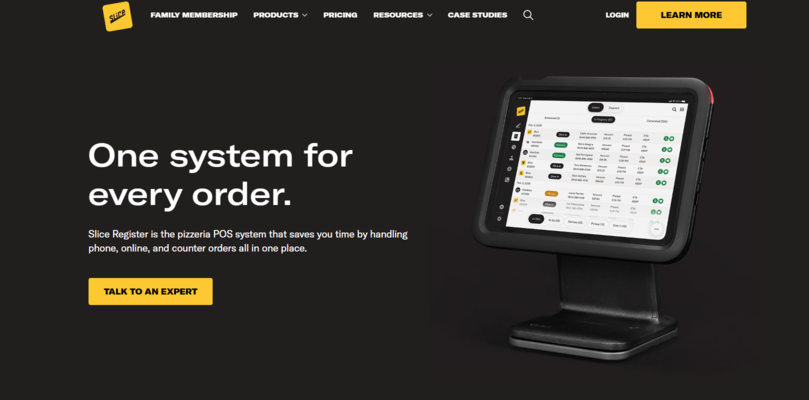

Slice Register is a point-of-sale system built specifically for independent pizza shops. It brings counter, phone, and online orders into one consistent workflow so your staff isn’t juggling multiple systems during a rush.
Slice’s trained team answers your phones and enters orders directly into your POS. On-site setup and staff training are handled for you, and 24/7 live support means a real person always picks up.
Benefits
- Counter, phone, and online orders in one unified workflow
- Phone orders handled by trained agents, entered directly into your POS
- Live delivery tracking with GPS and driver status updates
- Menu syncs across all platforms from one place
- Real-time sales data via the Owner’s App
- Purpose-built for independent pizza shops
- On-site hardware setup and staff training included
- 24/7 live support
- Flat-rate processing at 2.99% + $0.30 per transaction
Cons
- Designed for quick-service independents; may not suit full-service or multi-concept operators
14) Epos Now – General POS with Global Reach
Epos Now is a flexible POS system used across industries, including restaurants.
It combines POS, payments, and reporting into a cloud-based system.
Compared to pizza-focused platforms, it is more general-purpose.
Benefits
- Flexible setup
- Cloud-based
Pros
- Global availability
Cons
- Not pizza-specific
15) The POS Exchange – POS Comparison Platform
The POS Exchange helps restaurants compare POS systems and choose the right solution.
It offers access to multiple providers and educational resources.
It functions more as a research tool than a single system.
Benefits
- Comparison tools
- Educational content
Pros
- Helpful for research
Cons
- Not a standalone POS
Bottom Line
The best POS system depends on your operation, order volume, and growth goals.