

This article is for: Pizzeria owners, operators, and GMs who are evaluating online ordering systems and want to grow direct orders while keeping operations efficient and costs under control.
Top 13 Online Ordering Systems for Pizzerias (2026)
Online ordering is one of the highest-margin opportunities for pizzerias — but only if you control the experience, the data, and the workflow behind it.
The wrong system creates friction: tablets, missed tickets, duplicate menus, and inconsistent pricing. The right system removes those gaps and connects ordering directly to your kitchen, delivery flow, and marketing.
Below are 15 online ordering platforms used by pizzerias today — with real differences in how they handle orders, integrations, and customer ownership.
1) FoodTec Solutions – Best Fully Integrated Online Ordering System
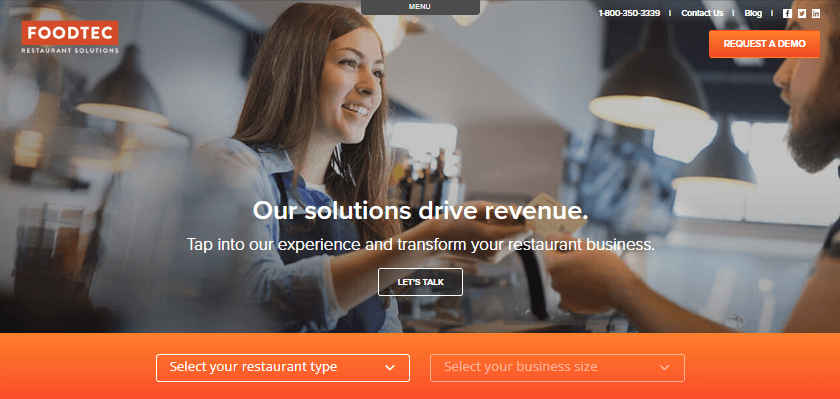
FoodTec’s online ordering is not a standalone tool — it’s part of a fully integrated system where orders, kitchen workflow, delivery tracking, and customer data all live in the same platform.
When a customer places an order online, it goes directly into the POS, is routed to the correct kitchen station, and (if delivery) is automatically tied to driver dispatch and tracking. There are no third-party tablets, no manual re-entry, and no syncing delays.
This matters most during peak hours. Instead of juggling multiple systems, staff are working from one flow — which reduces errors, speeds up fulfillment, and keeps operations consistent across in-store, online, and delivery orders.
Benefits
- Online orders go directly into POS and kitchen (no tablets)
- Delivery orders sync with driver tracking automatically
- Customer data feeds directly into marketing and loyalty
- One menu, one system across all channels
Pros
- No fragmented tools or integrations to manage
- Strong for high-volume pizza operations
- Built for delivery + pickup workflows
Cons
- Requires full system adoption (not a plug-in tool)
- More setup than lightweight ordering platforms
2) Owner.com – Best for Customer Retention & Marketing
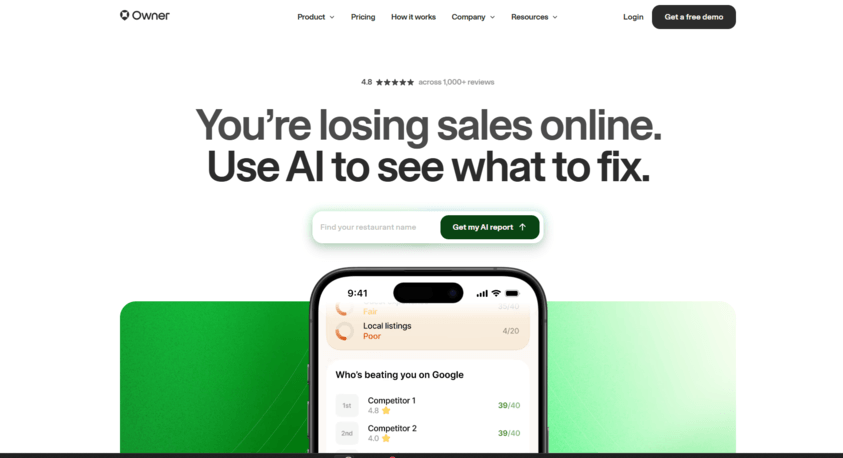
Owner.com acts as a conversion engine that sits on top of your existing website. Its primary goal is to bypass third-party apps by providing a superior user experience that “nudges” customers toward direct ordering. For pizzerias, this includes AI-driven upselling—suggesting specific sides like garlic knots or larger sodas based on real-time cart data.
The platform excels at automated SEO, ensuring your pizzeria appears at the top of local search results. It also automates “win-back” email and SMS campaigns for customers who haven’t ordered in 30 days, essentially acting as a digital marketing manager.
Benefits
- Automated marketing campaigns tied to order behavior
- Strong customer data and segmentation
- Branded ordering experience
Pros
- Excellent for increasing repeat orders
- Strong ROI on marketing automation
Cons
- Not a full operational system; relies on middleware for POS sync
- Premium pricing model can be expensive for low-volume shops
3) ChowNow – Commission-Free Direct Ordering
ChowNow is built for operators who want to protect their margins. Unlike marketplaces that take 15-30% per order, ChowNow uses a flat-fee subscription model. This makes it a favorite for pizzerias with high ticket averages and frequent repeat orders.
They provide “Order Better” marketing kits to help you convert your existing customer base away from high-commission apps. While they offer delivery logistics through third-party partners (like DoorDash Drive), the pizzeria maintains control over the customer relationship and data.
Benefits
- No per-order commission fees
- Branded ordering pages for web and mobile
- Access to “Order Better” marketing assets
Pros
- Predictable monthly cost helps with budgeting
- Good for transitioning off third-party apps
Cons
- Still requires POS integrations which can occasionally lag
- Operational flow is not as deep as all-in-one pizza POS systems
4) Slice – Built for Independent Pizzerias
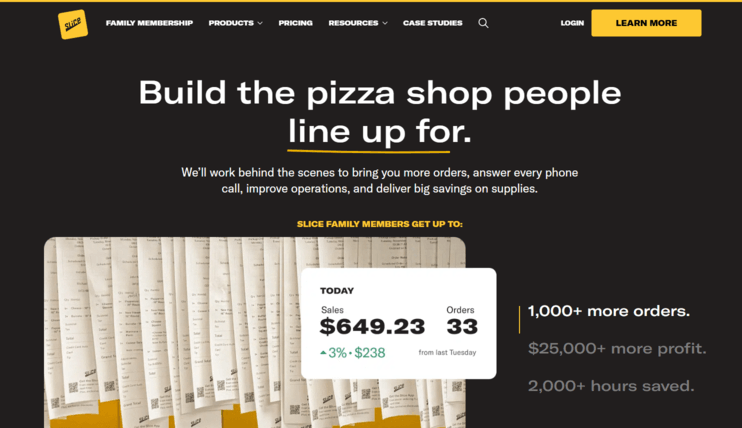
Slice is unique because it specifically targets independent pizza shops, effectively acting as a “digital franchise” for local owners. They invest heavily in national advertising to drive users to their app, providing small shops with the kind of digital visibility typically reserved for big chains like Domino’s.
The platform handles complex pizza-specific menu modifiers (like half-and-half toppings) better than general food apps. However, because it is a marketplace/portal hybrid, the branding is often Slice-first rather than shop-first.
Benefits
- Access to Slice’s massive built-in pizza-loving customer base
- Pizza-specific menu logic and workflows
- Low-cost entry for digital ordering
Pros
- Fast way to increase order volume without a marketing team
- Tailored specifically to the pizza industry
Cons
- Less ownership of the customer relationship
- Operators may feel “locked in” to the Slice ecosystem
5) GloriaFood – Best Free Entry-Level Option
Owned by Oracle, GloriaFood is the go-to starter solution. It provides a simple “Order Now” button that can be embedded into any website or Facebook page. For a new pizzeria or a shop testing the waters of digital ordering, it removes the financial barrier to entry.
While the base system is free, advanced features like online credit card payments, a branded mobile app, and advanced delivery zone geometry require paid monthly add-ons.
Benefits
- Zero upfront cost for basic ordering
- Very easy website and social media integration
- Visual “drag-and-drop” menu builder
Pros
- Extremely fast to launch (often within an hour)
- Ideal for small shops with basic needs
Cons
- Advanced features quickly add up in cost
- Minimal automation for marketing or delivery logistics
6) BentoBox – Best for Branded Websites + Ordering
BentoBox is a design-first platform. It’s built for pizzerias that want their digital presence to be as high-quality as their food. They specialize in “high-conversion” website design, using professional photography and sleek layouts to drive more orders per visitor.
Because the ordering experience is built into the website itself, there is no jarring jump to a third-party domain. This keeps the brand front-and-center, though the operational backend requires a solid integration with your existing kitchen hardware.
Benefits
- High-quality, professional branded websites
- Unified experience between the site and the ordering cart
- Built-in tools for selling gift cards and merchandise
Pros
- Superior brand control and aesthetic
- Strong SEO performance
Cons
- Ordering is not built for pizza-specific complexity (e.g., complex crust modifiers)
- Requires reliable third-party POS integrations
7) Olo – Enterprise Ordering Infrastructure
Olo is the industrial-strength engine behind many of the world’s largest restaurant brands. It is designed to handle extreme order volume across hundreds of locations simultaneously. Their “Rails” product is a major draw, allowing pizzerias to manage all third-party marketplace menus and orders from one central dashboard.
For large pizza chains, Olo offers unmatched stability and data security. However, the complexity of the setup makes it a poor fit for single-unit operators or small local chains.
Benefits
- Can handle massive order spikes during peak hours
- World-class integrations with nearly all major POS systems
- Centralized menu management for multi-unit operators
Pros
- Enterprise-grade reliability and security
- Extensive data analytics for corporate decision-making
Cons
- Significant setup fees and long implementation timelines
- Too complex and expensive for most independent shops
8) Flipdish – Ordering + Mobile Apps
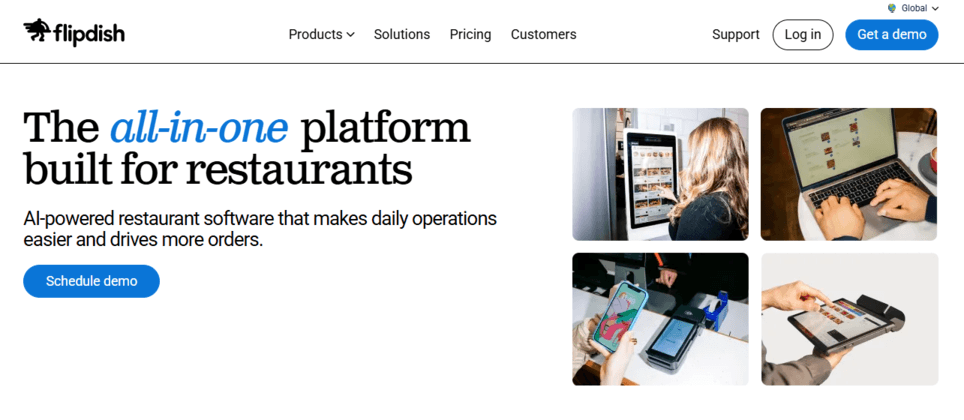
Flipdish focuses on the “App Economy.” They help pizzerias launch their own branded iOS and Android apps, allowing owners to send push notifications directly to customers’ phones. This is a powerful tool for driving orders on slow Tuesday nights with “Flash Sale” alerts.
Their system includes built-in loyalty programs that reward frequent buyers automatically. While strong on customer engagement, it still operates as a separate layer from the kitchen, meaning kitchen staff may still be managing an external tablet or integration.
Benefits
- White-label mobile apps for your brand
- Direct-to-consumer push notifications
- Integrated digital loyalty and rewards
Pros
- Excellent for building a dedicated fan base
- Easy-to-use marketing dashboard
Cons
- Not operationally integrated with kitchen/delivery workflows
- Requires a marketing effort to get users to download the app
9) Popmenu – Ordering + AI Marketing
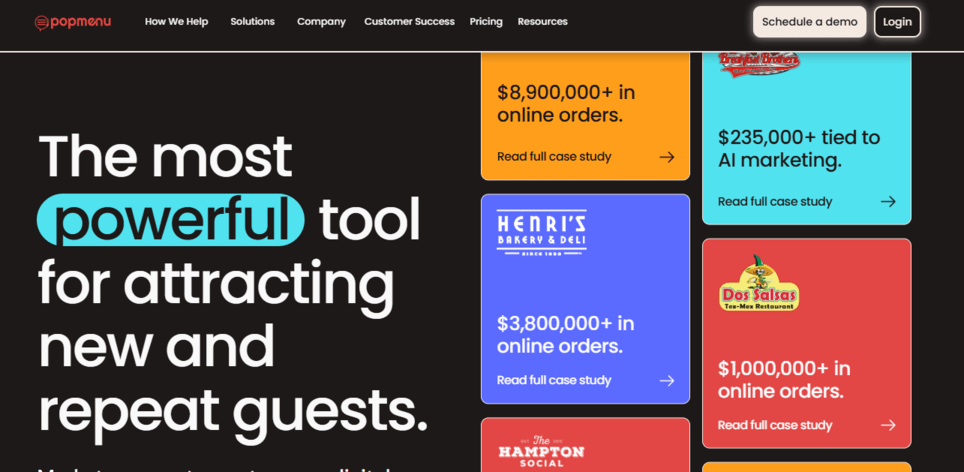
Popmenu turns your menu into an interactive social platform. Customers can “Like” specific items and leave reviews on individual pies, providing social proof to new visitors. Their AI marketing tool automatically generates social media posts and emails based on your most popular items.
For pizzerias that want to automate their social media and email marketing without hiring a dedicated staff member, Popmenu is an attractive “all-in-one” marketing suite that just happens to take orders too.
Benefits
- AI-powered marketing automation
- Interactive, photo-rich menus with customer reviews
- Consolidated marketing and ordering dashboard
Pros
- Strongest tool for customer growth and social proof
- High engagement rates on menus
Cons
- Operational control (kitchen/delivery) is secondary to marketing
- Relies on integrations for POS connectivity
10) Toast Online Ordering – Best for Toast Users
For pizzerias already using Toast POS, their native online ordering is the most logical step. Because it’s built on the same database, menu changes, “86ing” items, and price updates happen in real-time across both in-store and online channels.
The user experience is clean and familiar, though it lacks the deep customization of design-focused platforms. Its biggest strength is the lack of “integration friction”—orders just show up in the kitchen like any other ticket.
Pros
- Total synchronization with Toast POS (one menu to manage)
- Very reliable order flow into the kitchen
Cons
- Forces you to stay within the Toast ecosystem
- Limited marketing automation compared to specialists like Owner.com
11) Square Online – Simple Online Ordering
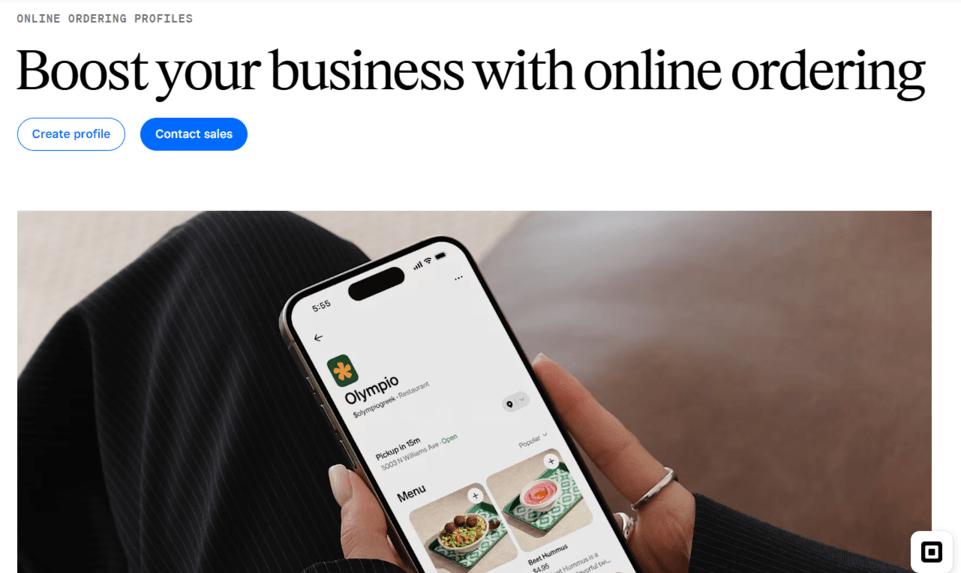
Square Online is the “accessible” choice. It’s highly intuitive—if you can use a smartphone, you can set up a Square site. It’s particularly good for pizzerias that also have a retail component (selling shirts, hats, or bottled sauces) because it handles mixed retail/food carts seamlessly.
While setup is fast, it lacks the deep “delivery logic” required for high-volume pizza shops, such as advanced driver dispatching or complex delivery zone pricing.
Pros
- Extremely user-friendly setup
- Unified inventory for retail and food
Cons
- Basic features lack pizza-specific depth
- Transaction fees can be higher than other flat-fee models
12) Menufy – Direct Ordering Platform
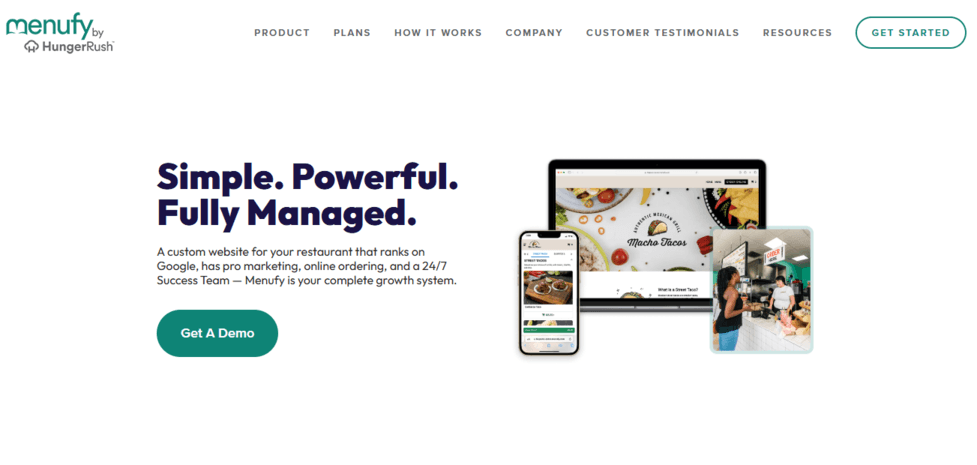
Menufy focuses on providing a clean, functional ordering experience with zero upfront cost or monthly fees. Instead, they typically charge a small fee per order to the customer. This allows pizzerias to offer online ordering to their community without any impact on their own bottom line.
It is a “no-frills” platform—it does the job of taking the order well, but it doesn’t offer the marketing firepower or operational depth of more expensive competitors.
Pros
- No monthly subscription fees for the restaurant
- Integrates with many legacy POS systems
Cons
- Very basic functionality and design
- Lacks advanced driver tracking or automated marketing
13) GloriaFood Clone by EnactOn – White-Label Alternative for Agencies & Resellers
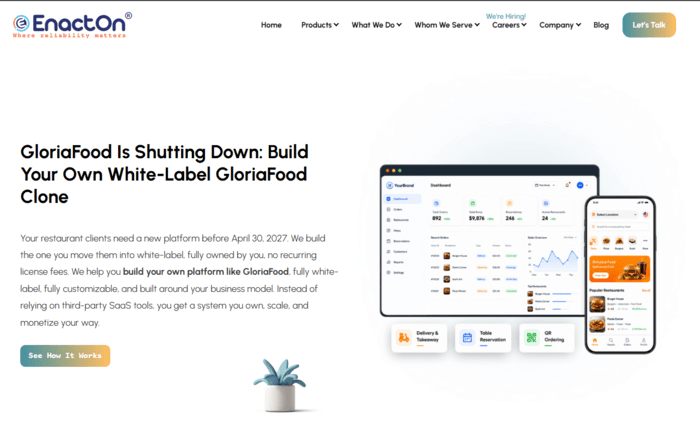
EnactOn builds a fully owned, white-label online ordering platform for agencies, resellers, and POS providers managing multiple restaurant clients. Built on a foundation already serving 400+ restaurants, it replaces dependence on GloriaFood or any single third-party vendor. Once delivered, the platform belongs to the reseller outright, with no recurring license fees or per-restaurant seat limits.
The platform includes a centralized dashboard for managing every restaurant on the network, with revenue, commissions, orders, and payouts in one place. Each restaurant can have its own commission structure, while the entire platform is fully branded with the reseller’s logo, domain, and color scheme, with no EnactOn branding visible anywhere in the product.
Following GloriaFood’s shutdown, the platform has become a timely alternative for agencies and resellers looking to migrate their restaurant clients to a fully owned platform. See EnactOn’s dedicated guide for GloriaFood resellers.
Pros
- Fully owned platform with no recurring license fees or per-restaurant seat limits
- One dashboard for managing revenue, commissions, orders, and payouts across every restaurant
- Individually configurable commission rates for each restaurant
- Fully white-labeled with your own branding throughout
Cons
- Higher upfront investment than subscription-based SaaS platforms
- Built for agencies and reseller networks, not individual restaurant operators