


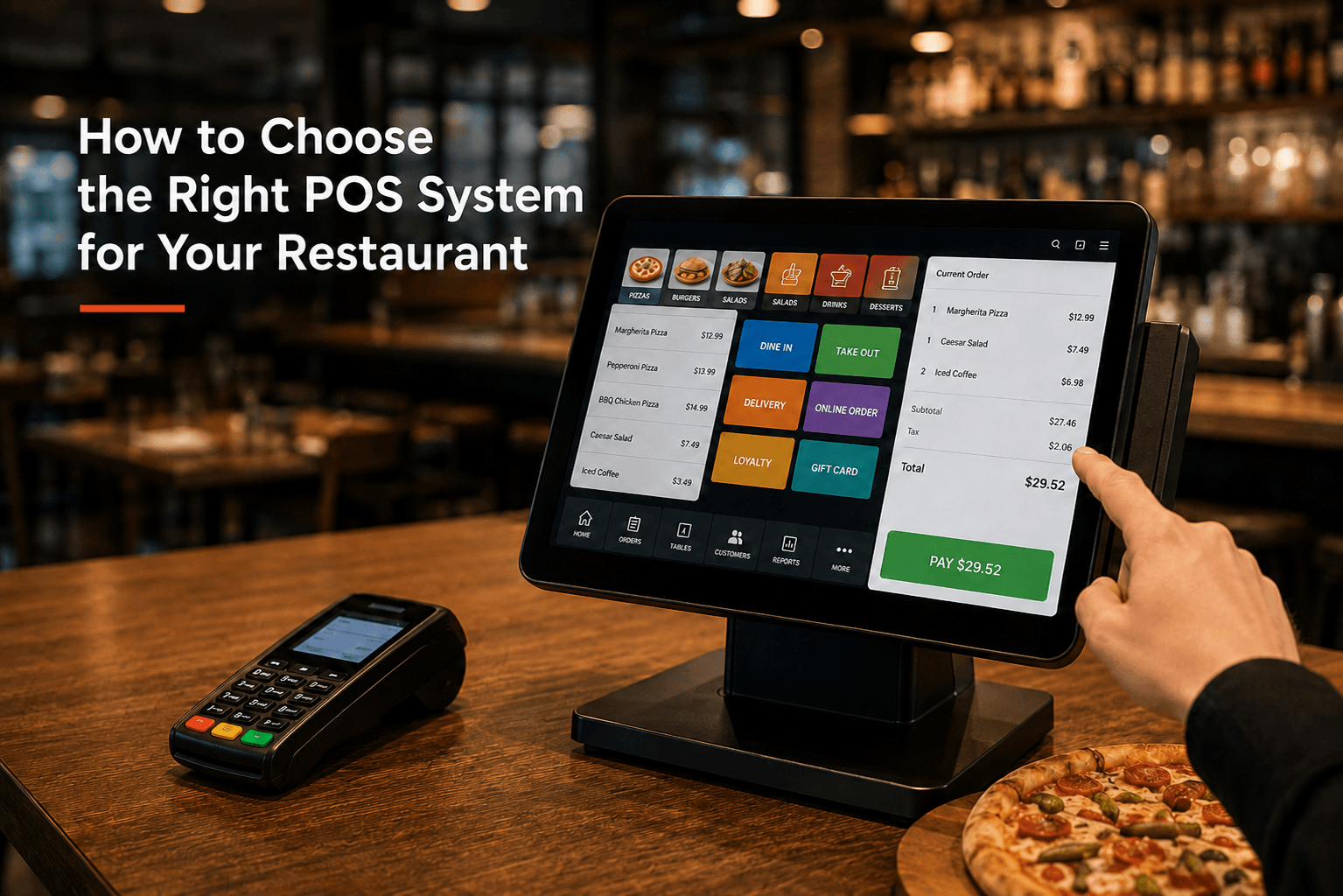
This article is for: restaurant owners, pizzeria operators, QSR managers, and multi-location businesses looking for a POS system that helps streamline operations, improve efficiency, and support long-term growth.
How to Choose the Right POS System
Running a successful restaurant requires more than great food and excellent service—it depends on having technology that keeps every part of your operation working together. A modern Point of Sale (POS) system is at the center of that operation, connecting your front counter, kitchen, online ordering, inventory, staff, and reporting in one place.
With so many POS providers on the market, finding the right solution can feel overwhelming. While many systems offer similar core features, not all are designed to meet the demands of a busy restaurant. The best POS system should simplify day-to-day operations, improve the customer experience, and provide the insights you need to make smarter business decisions.
Before making your investment, here are the key factors to consider when choosing a POS system for your restaurant.
1. Understand Your Restaurant’s Needs
Every restaurant operates differently, so the first step is identifying what your business needs from a POS system.
A neighborhood pizzeria, food truck, quick-service restaurant, and full-service dining establishment all have unique workflows. Taking time to evaluate your operations will help you avoid paying for features you don’t need—or missing the ones you do.
Ask yourself questions like:
- How many locations do you operate?
- Do you offer dine-in, takeout, delivery, or all three?
- Do customers place orders online?
- Do you need inventory management?
- Will you benefit from employee scheduling or labor reporting?
- Are loyalty programs important for customer retention?
Understanding your day-to-day operations makes it much easier to narrow your options.
2. Look Beyond Payment Processing
Today’s restaurant POS systems do far more than process credit card payments.
A modern solution should help you manage nearly every aspect of your business from a single platform.
Look for features such as:
- Menu management
- Kitchen Display System (KDS) integration
- Online ordering
- Delivery management
- Inventory tracking
- Employee management
- Loyalty and rewards
- Gift cards and promotions
- Detailed reporting and analytics
The more tools that work together, the more efficient your restaurant becomes.
3. Choose an Integrated POS System
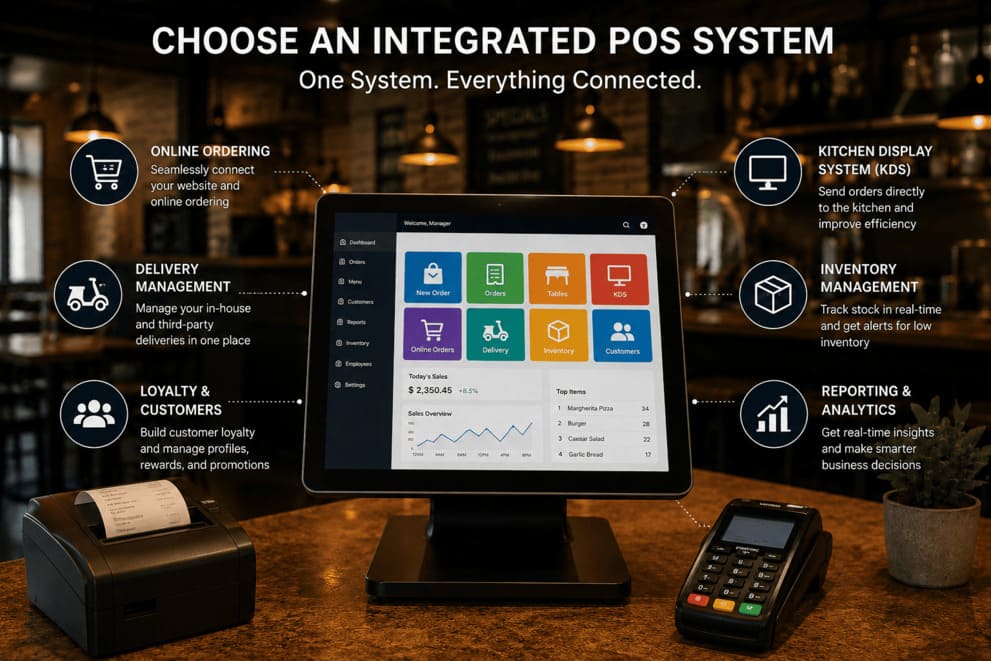
One of the biggest decisions you’ll make is whether to choose a POS that relies on multiple third-party applications or one that offers built-in functionality.
Some providers require separate software for online ordering, delivery management, loyalty programs, marketing, and reporting. While these integrations can work, they often mean higher monthly costs, more vendors to manage, and additional complexity for your staff.
An integrated POS system keeps everything connected, allowing you to:
- Sync menus across every ordering channel
- Send orders directly to the kitchen
- Keep customer data in one place
- Access centralized reporting
- Manage promotions without duplicate work
A single platform often leads to smoother operations and fewer opportunities for errors.
4. Prioritize Cloud-Based Technology
Cloud-based POS systems have become the industry standard—and for good reason.
Unlike traditional server-based systems, cloud solutions allow you to securely access your business from virtually anywhere.
Benefits include:
- Real-time sales reporting
- Automatic software updates
- Secure cloud backups
- Remote management
- Easier multi-location oversight
Whether you’re at the restaurant, at home, or traveling, you’ll always have visibility into your business.
5. Pay Attention to Reporting and Analytics
The best business decisions are driven by data.
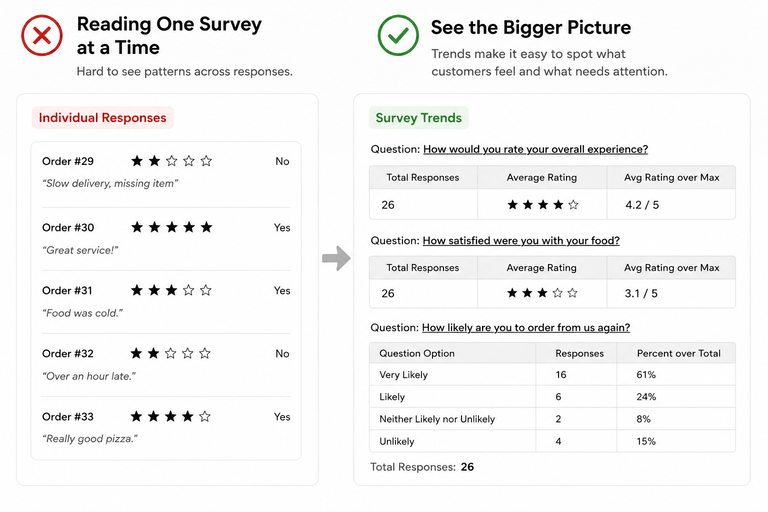
Your POS system should provide detailed reports that help you understand how your restaurant is performing.
Look for insights including:
- Daily and weekly sales
- Best-selling menu items
- Peak business hours
- Inventory usage
- Employee performance
- Customer purchasing trends
These reports can help you reduce costs, optimize staffing, and increase profitability over time.
6. Make Sure It’s Easy to Use
Even the most advanced POS system won’t help if it’s difficult for employees to learn.
An intuitive interface reduces training time, minimizes ordering mistakes, and allows your staff to provide faster service during busy shifts.
Before making a purchase, request a live demonstration or trial to see how the system performs in real-world restaurant scenarios.
7. Evaluate Customer Support
Restaurant technology is critical to daily operations, which means dependable customer support should never be overlooked.
If technical issues arise during a lunch rush or Friday night dinner service, having access to knowledgeable support can make all the difference.
Look for providers that offer:
- 24/7 technical support
- Remote troubleshooting
- Ongoing software updates
- Staff training resources
- Dedicated onboarding assistance
Reliable support helps minimize downtime and keeps your restaurant running smoothly.
8. Consider Future Growth

Your POS system should grow alongside your business.
If you plan to expand, your technology should easily accommodate:
- Additional restaurant locations
- Franchise operations
- Online ordering growth
- Delivery expansion
- Customer loyalty programs
- New revenue channels
Choosing a scalable solution today can save you the expense and disruption of switching systems later.
9. Compare the Total Cost of Ownership
Price is important—but it shouldn’t be the only factor.
When evaluating POS providers, compare the complete investment, including:
- Hardware
- Software subscriptions
- Payment processing fees
- Installation costs
- Support services
- Training
- Third-party integrations
- Future upgrades
A slightly higher monthly investment may actually save money if it replaces several standalone platforms.
Questions to Ask Before Choosing a POS System
Before signing a contract, ask every POS provider these important questions:
- Is online ordering included or does it require a third-party service?
- How are software updates handled?
- Can the system grow with multiple locations?
- What reporting capabilities are included?
- What support is available if the system goes offline?
- Are there long-term contracts or hidden fees?
- How long does implementation typically take?
- Does the system integrate with my existing business tools?
The answers will help you compare providers beyond just pricing.
Why Your POS System Matters
A POS system is much more than a payment processor—it’s the technology that supports nearly every part of your restaurant.
The right solution helps improve operational efficiency, reduce manual work, enhance the customer experience, and provide the insights needed to make smarter business decisions.
Investing in the right POS today can position your restaurant for greater success tomorrow.
Find the Right POS for Your Restaurant
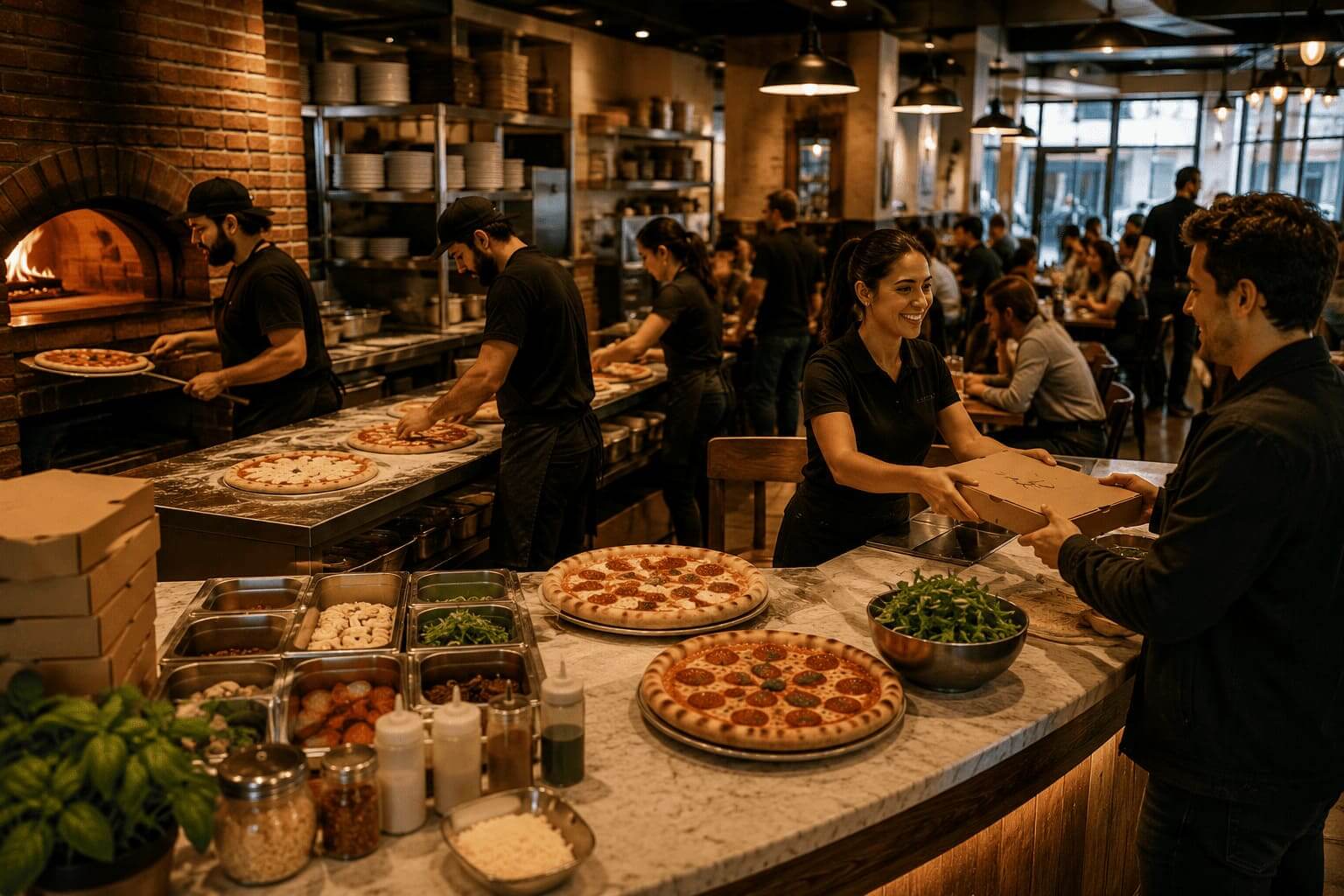
Choosing a POS system is one of the most important technology decisions a restaurant owner can make. By evaluating your operational needs, comparing features, and selecting a platform that can grow with your business, you’ll be better equipped to improve efficiency and deliver an exceptional customer experience.
At Foodtec Solutions, we understand that every restaurant operates differently. That’s why we provide an all-in-one restaurant technology platform that brings together POS, online ordering, delivery management, loyalty programs, marketing, reporting, and back-office tools into one integrated solution.
Whether you’re opening your first restaurant or managing multiple locations, choosing the right POS system can help simplify operations today while preparing your business for future growth.